Life and Capital
Abstract
Life events create demands on capital that need not wait for favourable markets.
Capital at Risk — Paper 07
I. Uncertainty
Capital planning is usually framed as a response to uncertain markets.
Markets fluctuate, interest rates change, and economic conditions evolve in ways that cannot be predicted with precision.
Yet many of the most significant uncertainties surrounding capital arise outside markets altogether.
Families expand and contract. Marriages, divorces and inheritances alter financial structures. Health events, relocations and business exits can create demands on capital that are difficult to anticipate.
In that sense, the uncertainty facing many portfolios does not arise from markets alone. It arises from life itself.
Portfolio design must accommodate not only uncertain market outcomes but uncertain future demands on capital.
II. Fragmented Perspectives
Modern wealth management is organised through specialised disciplines.
Investment managers construct portfolios. Tax advisers address efficiency and compliance. Lawyers design legal structures. Custodians safeguard assets and administer transactions.
Investment managers see allocations between asset classes and funds. Tax advisers see liabilities and reporting obligations. Lawyers see ownership structures and governance arrangements.
The life of the family behind the capital often sits outside these perspectives.
Capital may move between portfolios and structures, but the circumstances that cause it to move — marriage, divorce, inheritance, relocation, health or generational transition — are rarely visible within any single discipline.
No participant in the system sees the full context in which the capital exists.
III. Capital in Context
For many families the largest demands on capital do not arise from markets but from life events.
Property purchases, jurisdictional moves, generational transfers or healthcare costs can all create sudden liquidity requirements.
They may arise during periods of market stability or during financial stress.
Portfolio construction therefore becomes more than an exercise in return optimisation. It requires structuring capital so that it can respond to uncertain future demands arising from both markets and life.
IV. Liquidity Architecture
Liquidity pressure is often discussed in the context of market stress, where falling prices and redemption demands force assets to be sold.
Yet capital may also be required for reasons entirely unrelated to markets.
A property purchase, a generational transfer or a jurisdictional move may require substantial liquidity regardless of whether markets are rising or falling.
These events differ from market volatility in an important way. Market fluctuations are continuous and observable. Life events are irregular and discontinuous.
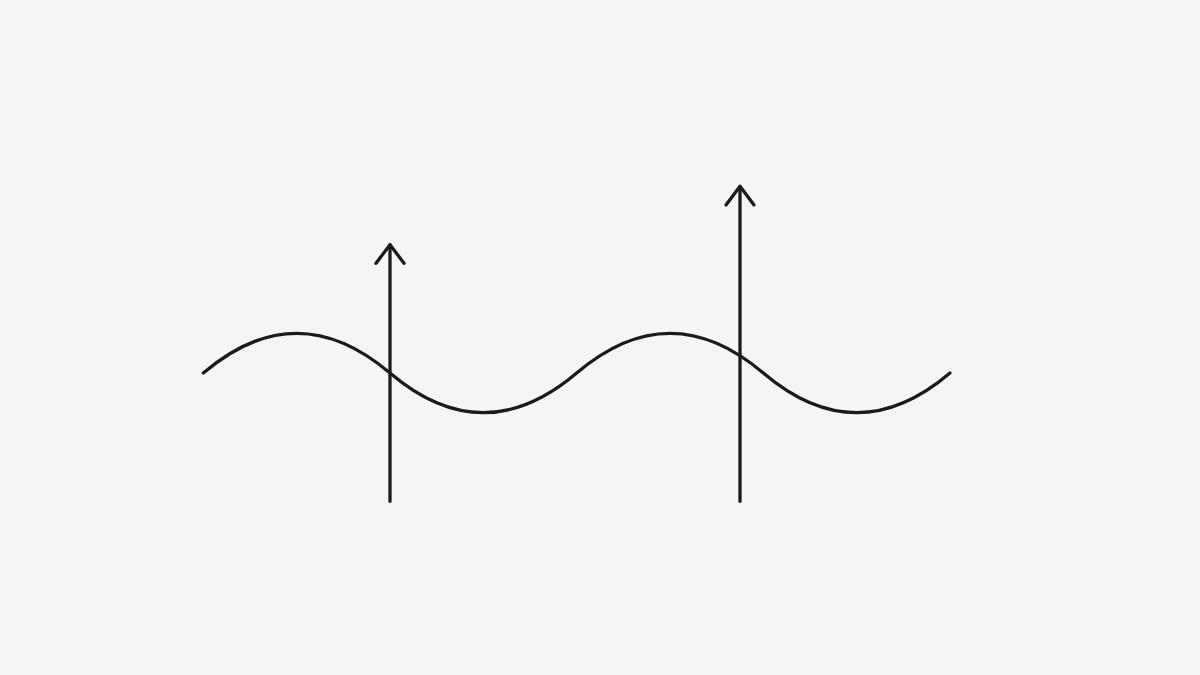
A portfolio can tolerate market volatility provided assets are not forced to move. Life events, by contrast, may require capital to move regardless of market conditions.
Rather than protecting portfolios from volatility alone, capital structures must ensure that liquidity can be obtained without destabilising the broader portfolio.
V. Implication
Markets introduce uncertainty, but they are not the only source of it.
Families evolve. Jurisdictions change. Capital moves between generations.
These developments rarely occur in synchrony with market cycles.
Portfolios constructed solely around market behaviour may therefore overlook the circumstances that most frequently require capital to move.
The problem is not optimisation. It is architecture.
Further Reading
Receive new papers
New papers, sent occasionally. No marketing sequences. No commentary churn.