Capital Floors and Segmented Risk
Abstract
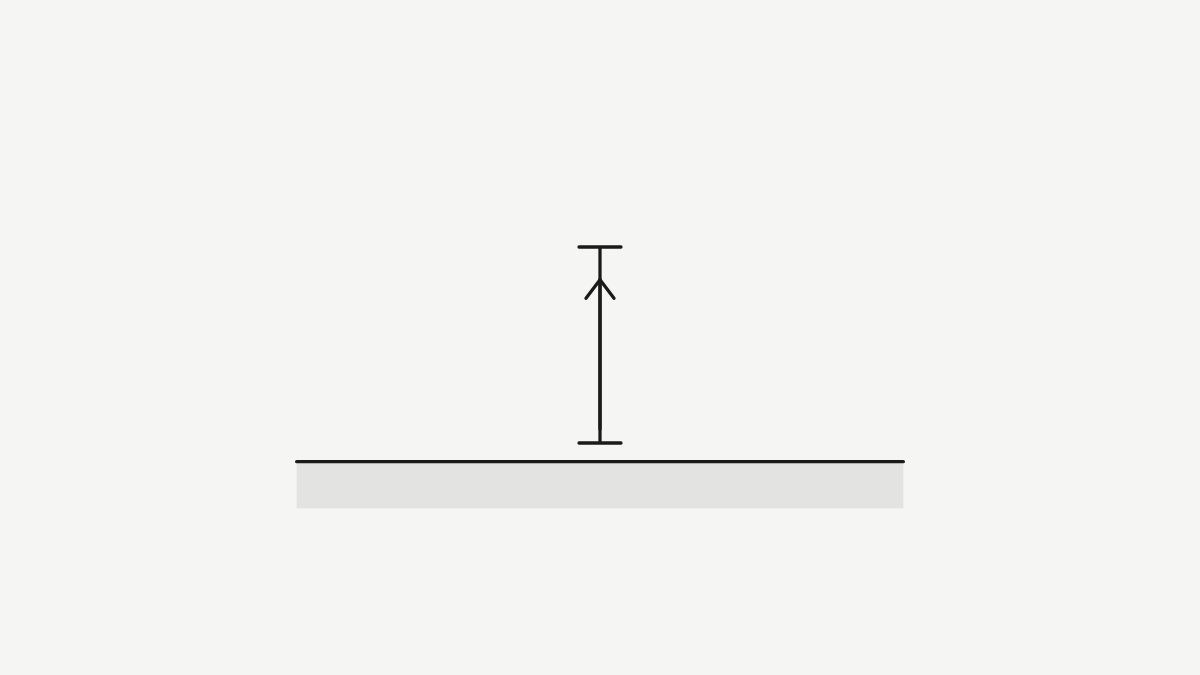
Separating capital by function: a contractual floor beneath a bounded sleeve of participation.
Capital at Risk — Paper 02
I. When “Low Risk“ Fails
Traditional portfolio construction assumes that combining equities and bonds reduces risk. Equities provide growth. Bonds stabilise. The interaction between them is expected to smooth outcomes.
That assumption held long enough to feel embedded.
The 2022 repricing of UK gilts exposed one of those limits. Portfolios marketed as cautious or balanced — often carrying substantial bond allocations — suffered material losses as yields rose and long-duration bonds repriced.
That loss did not require a failure of market liquidity. An individual long-dated gilt and a pooled gilt fund could both fall materially in market value when the discount rate changed.
Structure creates a separate question.
An individual bond has a maturity date and, absent default, a contractual repayment value. A pooled bond fund has no equivalent terminal point for the investor: it continually rolls its holdings, prices daily and may also have to accommodate investor flows.
The distinction does not remove duration risk. It changes the conditions under which the holder may be able to wait for contractual repayment rather than realise the prevailing market price.
Duration risk and liquidity structure are therefore different problems. In stressed conditions they can interact.
Diversification distributes exposure. It does not eliminate fragility.
II. Contractual Capital
An individual bond has a contractual maturity. Subject to its terms and the issuer remaining able to pay, the holder knows the nominal amount due at maturity and the contractual coupons along the way.
That does not eliminate economic loss. Inflation can erode the real value of the repayment, opportunity cost can be substantial, and a holder who needs liquidity before maturity remains exposed to the prevailing market price.
What the maturity provides is a defined contractual end point.
A bond fund has no such end point. It rolls exposure continuously. Its net asset value reflects prevailing yields and investor behaviour. In calm conditions the distinction appears minor. In stressed conditions it does not.
Credit risk remains. If the issuer fails, the contract fails. That risk must be assessed and diversified. It cannot be ignored.
But the holder of an individual bond is not required to transact simply because others do. The recovery path is contractual rather than flow-dependent.
That difference matters.
III. Risk is Multi-Dimensional
Risk is not the probability of loss in a model. It is the structural capacity to absorb regime change without forced action.
Risk is not one-dimensional, nor is it fully captured by volatility bands or historical drawdown statistics. It is multi-layered: liquidity risk, correlation risk, behavioural risk, funding risk, sequence risk. In stable periods these dimensions appear manageable. In unstable periods they interact.
When they interact, portfolios that looked diversified on paper can behave like concentrated exposures in practice. Assets assumed to offset one another begin to move together. Liquidity that was assumed to be available becomes conditional. Behavioural pressure intensifies at precisely the wrong moment.
That interaction, more than variance alone, defines fragility.
Most asset allocation frameworks describe risk as a spectrum determined largely by equity weighting. The label changes from cautious to adventurous. The underlying mechanics often do not.
Segmentation begins with acknowledging that risk propagates.
IV. Capital Floors and Participation
If risk is multi-dimensional, capital should not be treated as homogeneous.
One approach, particularly relevant in late-cycle environments, is to separate capital by function rather than by asset label.
One segment is designed for contractual recovery. It may consist primarily of individual fixed-income instruments selected such that, absent credit impairment, a substantial portion of capital is returned over a defined horizon through maturity value and coupons. The purpose is not to maximise yield. It is to anchor capital and define recoverability.
The second segment is allocated to directional participation in risk assets. This participation can be implemented through instruments that provide asymmetric exposure, accepting bounded loss in exchange for upside potential.
Such instruments are subject to time decay and volatility dynamics. They can expire worthless. That outcome is predefined and contained within the allocated sleeve.
The objective is not to eliminate uncertainty. It is to control how loss propagates. A decline in the participation sleeve does not impair the contractual recovery segment. A rise in risk assets allows continued engagement and reduces the behavioural pressure associated with defensive positioning.
This structure is not optimised for uninterrupted expansion. It is designed for environments in which fragility is rising beneath surface stability.
V. Correlation Convergence
Historical stress episodes show that cross-asset correlations tend to rise when liquidity contracts. Dispersion that appears reliable in stable conditions can narrow quickly during periods of de-risking.
The growth of passive allocation, algorithmic execution, and globally integrated capital markets has increased synchronisation in such episodes. When risk is reduced mechanically, it propagates across exposures that were assumed to be diversified.
Geographic allocation does not prevent this effect. In stressed regimes, regional equity and credit exposures frequently move together as funding conditions tighten.
Traditional diversification is calibrated to dispersion in calm environments. It offers less protection when instability becomes systemic.
Segmented risk architecture does not depend on correlation offsets. It depends on contractual recovery in one segment and bounded exposure in another.
The distinction becomes visible when dispersion collapses.
VI. Designing for Regime Transition
If markets rise steadily over the next several years, a fully invested equity portfolio may outperform a segmented structure. That is plausible.
The more relevant comparison is how each structure behaves across discontinuous outcomes: equity crashes, bond market dysfunction, liquidity withdrawal, or abrupt regime shifts.
After a significant repricing event, forward asymmetry often improves. Broad equity exposure can then be held with less structural tension. Before such a reset, however, fragility can accumulate beneath apparent stability.
Segmenting capital into contractual recovery and bounded participation does not predict turning points. It alters the consequences of being wrong about timing.
Most portfolios are described through asset allocation labels. Fewer are designed through fragility segmentation.
The difference is subtle in stable periods.
It is less subtle when regimes change.
Further Reading
Receive new papers
New papers, sent occasionally. No marketing sequences. No commentary churn.